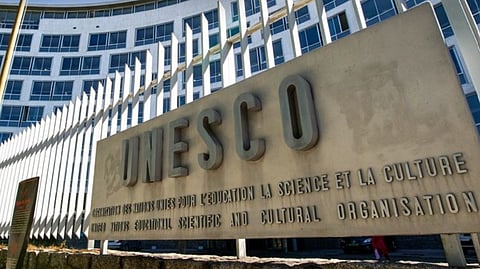


The United Nations Educational, Scientific and Cultural Organization (UNESCO) has awarded its 2026 Prize for Girls’ and Women’s Education to two initiatives in Morocco and Peru for their work in expanding educational opportunities for adolescent girls.
The award recognises Project Soar in a Bag, implemented by Project Soar in Morocco, and the Girls with Opportunities (GWO) programme run by CARE Peru. Each initiative received $50,000 to support and expand its work towards improving access to education for girls and women.
The awards were presented by UNESCO Director-General Khaled El-Enany and Ren Youqun, vice-minister of education of the People’s Republic of China, at a ceremony held at UNESCO headquarters in Paris on October 9. The ceremony took place ahead of the International Day of the Girl Child, observed on October 11.
Project Soar was recognised for its initiative, Project Soar in a Bag, which helps adolescent girls from underserved communities remain in school and plan their futures. Delivered by trained local women facilitators, the programme focuses on five areas: value, voice, body, rights and path.
The initiative aims to build girls’ confidence, improve their health literacy, increase awareness of their rights and help them plan their futures. It combines empowerment activities, menstrual health support and community engagement to address barriers to education, including child marriage. Through Soar Clubs, girls develop solutions to challenges in their communities, while Soar Dialogues bring together parents, teachers and community members.
In 2025, 97.5 per cent of participating girls passed their school year, while 99 per cent remained free from child marriage, according to UNESCO.
The second award went to CARE Peru’s Girls with Opportunities programme, which supports adolescent girls from rural and Indigenous communities in completing secondary education and pursuing further studies or decent employment.
The programme adopts a whole-school approach, combining socio-emotional learning, comprehensive sexuality education, science, technology, engineering, arts and mathematics (STEAM), financial education, life planning and mentoring.
According to UNESCO, secondary school completion among participants increased from 65 per cent to approximately 82 per cent. Reported cases of adolescent pregnancy in targeted schools also declined by 50 per cent.
Since its launch in 2016, the programme has reached more than 37,000 rural adolescent girls aged 14 to 19.
Established in 2015 and funded by the Government of the People’s Republic of China, the UNESCO Prize for Girls’ and Women’s Education recognises innovative contributions to improving educational opportunities for girls and women. The award supports global efforts to promote quality education and gender equality, contributing to the United Nations Sustainable Development Goals 4 and 5.
