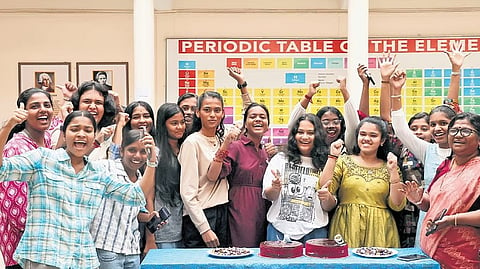


The Prime Minister’s Special Scholarship Scheme (PMSSS) has allotted 4,715 scholarships to students from Jammu and Kashmir and Ladakh for the 2026-27 academic year, reaching 94.3 per cent of its annual target of 5,000, according to the Jammu and Kashmir Higher Education Department.
The current allotment is 1,130 higher than the 3,585 scholarships recorded during the entire 2025-26 academic year, marking an increase of 31.5 per cent. The scheme recorded 3,674 beneficiaries in 2024-25 and 3,627 in 2023-24.
Of the 4,715 scholarships allotted for 2026-27, 2,741 are for professional courses, 1,894 for general degree courses, and 80 for medical and Bachelor of Dental Surgery (BDS) courses. The respective targets for these categories are 2,830, 2,070 and 100.
What is the PMSSS scheme?
Launched in 2011, the PMSSS aims to expand access to undergraduate education for students from Jammu and Kashmir and Ladakh by enabling them to study at institutions outside the two Union Territories. The All India Council for Technical Education (AICTE) implements the scheme through a centralised counselling process. It provides financial assistance for academic fees and maintenance expenses.
The scheme reserves 5,000 scholarships annually across three categories. General degree courses have 2,070 scholarships, professional courses have 2,830, and medical and BDS courses have 100.
Under the scheme's published provisions, academic fee support can reach Rs 30,000 annually for general degree courses, Rs 1.25 lakh for professional courses and Rs 3 lakh for medical courses. Students can also receive maintenance assistance of up to Rs 1 lakh annually to cover expenses such as accommodation, meals and books.
Who is eligible?
Students must have domicile status in Jammu and Kashmir or Ladakh and have passed Class 12 from the relevant boards or eligible schools in the two Union Territories. The scheme also covers eligible students who have completed a three-year diploma in the Union Territories and seek direct admission to the second year of an engineering programme. The annual family income limit is Rs 8 lakh. Other admission and institutional requirements apply.
How is the scheme being implemented?
The Jammu and Kashmir Higher Education Department coordinates registration, counselling and document verification. It also operates facilitation centres to help students complete the process and reviews implementation through a Union Territory-level committee.
With 4,715 scholarships allotted, 285 remain against the annual target. The latest figures reflect the number of scholarships allotted, rather than confirmed enrolments or completed fee disbursements. The final outcome will depend on the remaining allotments and students meeting the scheme's admission and verification requirements.
