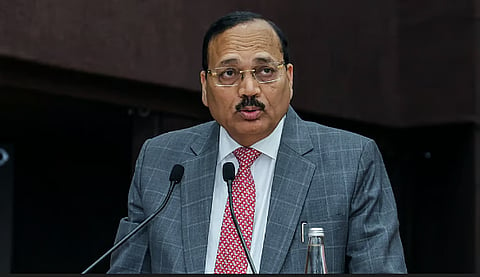

NEW DELHI: Young lawyers, judicial officers, youth and legal professionals are a positive force behind the judiciary’s technological transformation, Chief Justice of India Surya Kant has said.
Addressing the Oxford Union on the theme ‘Constitutional Promise to Digital Reality: Safeguarding Justice in the Age of AI and Technological Advancement’, the CJI also underscored that technology can never substitute human judgement.
“The youth-in-law, I am using the word, are so adaptive in India, whether the district court judicial officer, the government lawyer, or even those who are assisting the corporate entities as legal advisors,” CJI Kant—who is currently on a visit to the United Kingdom—said.
He noted that the adaptability of young professionals across the legal system has made the transition to digital courts, e-filing, and AI-assisted research smoother. “Their comfort with technology is encouraging, and it strengthens the institutional capacity of the judiciary to serve better,” the CJI added.
However, he cautioned against over-reliance on technology. “AI and other tools must remain aids to decision-making. The conscience, discretion, and ethical reasoning of a judge cannot be coded into an algorithm,” he said.
CJI Kant said the constitutional promise of justice in India requires that technological advancement be guided by safeguards. “In the age of AI, our duty is to ensure that digital reality aligns with constitutional values, not the other way around,” he observed. He highlighted that the judiciary’s efforts to modernise court processes had succeeded because of the adaptability of young legal professionals, stating: “The youth-in-law I am using the word is so adaptive in India, whether the district court judicial officer, whether the government lawyer, and even those who are assisting the corporate entities as legal advisors. All these young brains are so adaptive that they have been a really encouraging source for the Indian judiciary to bring all these r formative changes,” CJI Kant stressed.

