
Across the country, the word 'entrepreneur' is developing a new meaning. More young people now begin their working lives through experiments of their own making, not formal beginnings. Some are tutoring after class, some are repairing phones in a corner of the neighbourhood market, some are stitching together small online orders from a room that doubles as storage. Others are returning from office hours and trying to turn one skill into a second income. In these ordinary and unglamorous attempts is where a great deal of India’s entrepreneurial energy seems to actually sit.
For years, the public imagination has been trained on the spectacular: the big raise, the scale story, the founder profile written in the glow of funding. But if you spend time speaking to students, early professionals, or families outside the metros, a different picture appears. What they want is control, not conquest. Stability, not spectacle. A chance to build something that fits the contours of their lives instead of stretching those lives to fit an idea of success designed elsewhere. And in that space, the distance between “trying something” and “building something” is smaller than it looks, but it is perhaps the hardest distance to cross alone.
Institutions like the Entrepreneurship Development Institute of India (EDII) sit at the hinge of that transition. They see where young founders stall, where they surge, and where a modest experiment starts to behave like a real enterprise. They also understand the weight of context: the pressure to be novel, the shame attached to ‘ordinary’ ideas, the bureaucratic fog that greets anyone who tries to formalise what began as a side activity. Above all, they see the truth that the rest of the ecosystem often forgets. Most sustainable businesses in this country are small, and they are local. They are built quietly, and they matter.
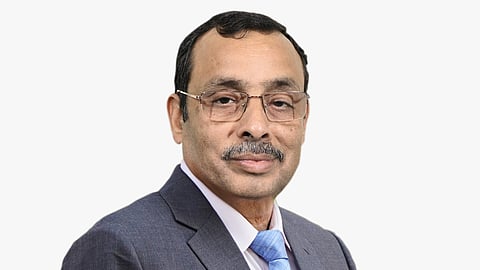
To understand that terrain with more clarity, we spoke with Dr Sunil Shukla, Director General of EDII. What follows is a conversation about intent, momentum, missteps, and the kind of preparation that allows a young person to turn a workable idea into a steady, long-term enterprise.
When you look at early-stage ventures run by young people, what tells you that something is being built with intent, rather than just being tried casually?
Commencement of a business, big or small, starts with creative and innovative thinking, a solution-driven approach, strong networking and in-depth research on markets, consumer demands etc. If a product or a service is being offered from the point of making it a business, extensive brainstorming has to go into some of the critical questions, such as; ‘How economically and attractively can I package the product/service?’, ‘What means do I employ to reach out to consumers?’, ‘How do I optimally tap the market?’ and so on. Also, funding support, expansion, infrastructure and expertise have to be looked into, in the detailed project report. Also, youths who venture out with a business idea have high achievement-motivation. These traits clearly distinguish a potential entrepreneur from anyone who simply starts something as a side hustle. Any business which starts after proper groundwork as mentioned above can be called a ‘solid small business.'
In your experience, what are the most common points where young people get stuck when they try to move from informal self-employment to a registered, formal business?
Setting up and running a formal business enterprise encompasses multiple operations which demand certain competencies in the entrepreneur. It needs a balanced combination of skills, knowledge and aptitude (mindset) to succeed in business. An unaware youth trying to move from informal self-employment to a registered formal business will stumble by uncertainty, ambiguity and bureaucratic hassles, in the absence of the right knowledge about manoeuvring through processes, systems and policies.
A lot of our readers may feel their ideas are “too ordinary” to count as entrepreneurship. Which seemingly "boring" sectors have you seen young founders succeed in, and why do these sectors work well for them?
These days, many students from premier institutes are opting out of placements and going ahead with plans to set up their own enterprise. I guess that is the kind of spirit and confidence we need to have. Starting big or small, every such story is an inspiration. As for EDI’s alumni, 78 per cent of them are successfully managing their own businesses, either as a first-generation entrepreneur or a family business successor. There are students who have chosen the same existing field but have introduced an element of innovation or a unique feature, thus making their product stand out. For instance, Jainam Kumarpal Shah, an EDI Alumni launched ‘Bhu:sattva’, a healthy, eco-friendly, and trendy, herbal-dyed natural fibre-blended organic designer apparel brand, targeted at the age group of 18-55 years of the elite class. Moreover, it aims to revive the languishing ancient Indian art forms and thus empower craftsmen. Such and many other innovative projects of EDI Alumni are inspiring.
Could you walk us through one or two journeys of young entrepreneurs you have worked with, and tell us what made those ventures hold together over time?
· Mr Nishank Shah, 2012-2014 batch
Nishank Shah, Director of Duro Green Waste Management Pvt Ltd, ventured into the waste management sector at a time when wet waste was largely neglected due to its lack of resale value. Identifying both a challenge and an opportunity, he developed a structured, decentralized model that transformed wet waste into a sustainable business solution. Under his leadership, Duro Green serves industries, PSUs, residential societies, hospitals, and food outlets. The company diverted over 12,775 metric tonnes of waste from landfills, prevented 10.67 lakh kg of methane emissions, and created 70+ green jobs. Today, Nishank runs a multi-crore business having more than 80 employees, and has a presence in four cities across Maharashtra and Gujarat.
· Mr Pratik Bachkaniwala, 2001-2002 batch
Pratik’s entrepreneurial journey began with a spark ignited at a summer camp at EDII and early exposure to his family’s textile machine manufacturing business. Going back to his family business, Pratik introduced advanced management techniques and analysed numerous project reports to identify expansion opportunities. Despite facing challenges, including a family business division and initial financial setbacks, Pratik navigated through adversity with resilience. His present turnover is Rs 35 crore.
For a reader in a Tier II or Tier III city who wants to start small in the next year, what three simple steps would you suggest they take to move closer to a serious, long-term business?
‘Preparation’ will be my one-word answer. A business mind-set coupled with entrepreneurial competencies is a must. Training or orientation in entrepreneurship such that the prospective entrepreneur has all the knowledge, skills and information, could be a game changer. Knowledge of procedures, formalities, legal aspects, markets, business environment, etc., is necessary before taking the plunge. The skill of managing people, money, materials, and markets, and the aptitude to take calculated risks and quick decisions, are equally significant.

