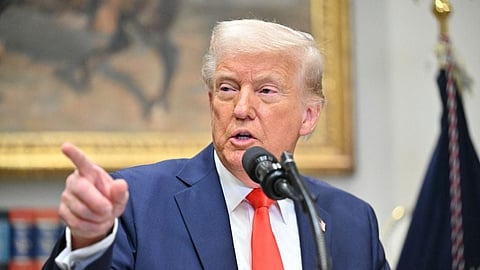

The US Department of Labor's Office of Inspector General has launched an investigation into the J-1 exchange visa programmes of nine universities, including Harvard, Yale, Stanford and the Massachusetts Institute of Technology (MIT). The department announced on October 9 that subpoenas had been served on all nine institutions and that investigations were under way.
The investigation will examine whether the universities misused or misclassified J-1 visa holders, potentially allowing institutions to avoid employment obligations, pay lower wages and compromise the integrity of federally funded research programmes. US Vice-President JD Vance has accused the institutions of using foreign researchers to undercut American graduate students and researchers. The universities have not been found guilty of fraud, and the allegations remain under investigation.
Which universities are under investigation?
The nine institutions named by the US Department of Labor's inspector general are:
Harvard University
Yale University
Stanford University
Brown University
University of Pittsburgh
University of California, Davis
California Institute of Technology (Caltech)
Arizona State University
Massachusetts Institute of Technology (MIT)
The investigation was announced at a White House Fraud Task Force event on October 8. Anthony D'Esposito, the Department of Labor's inspector general, confirmed that subpoenas had been issued to all nine universities.
Brown, Harvard and MIT confirmed receiving subpoenas. MIT described its subpoena as broad and said its J-1 visa holders had been vetted and authorised by the US government. Stanford said it complied with applicable visa laws and would cooperate with investigators. Yale and the University of California, Davis also said they would cooperate or review the matter, while Arizona State University defended its hiring practices as compliant with US law.
What is the J-1 visa?
The J-1 is a non-immigrant visa issued to foreign nationals participating in approved exchange visitor programmes in the United States. Administered through the US Department of State's Exchange Visitor Program, known as BridgeUSA, it covers a range of activities, including academic study, teaching, research, internships and professional training.
Universities use the programme to host international professors, research scholars and students. In the research scholar category, foreign nationals may conduct research, observe or consult on projects at universities, research institutions and other eligible organisations. The programme is intended to facilitate the exchange of knowledge and ideas between American and international participants.
J-1 is not the same as the F-1 visa, which is primarily used by international students pursuing academic programmes, or the H-1B visa, which allows US employers to hire foreign nationals for certain specialised occupations. The J-1 is tied to an approved exchange programme and its specific requirements.
Why is the Trump administration investigating the universities?
The administration's central allegation is that some universities may be using foreign researchers on J-1 visas as a lower-cost alternative to American graduate students and researchers.
At the October 8 announcement, Vance claimed that American graduate students and researchers earned approximately $20,000 more than their counterparts brought in on J-1 visas. He also said that 61 per cent of postdoctoral workers and researchers supported by federal grants at the nine universities were foreign nationals, compared with 38 per cent at other universities.
The administration argues that the figures warrant scrutiny of how the institutions recruit and classify foreign researchers, and whether the visa programme is being used in ways that disadvantage American workers. D'Esposito said investigators would examine potential misuse and misclassification, including whether the arrangements allowed universities to avoid employment obligations or exploit taxpayer-funded research programmes.
However, the figures cited by officials do not, by themselves, establish visa fraud or prove that foreign researchers are being paid less for equivalent work. The announcement did not provide a detailed public account of the evidence supporting the wage comparison. The purpose of the investigation is to establish whether the institutions violated applicable rules.
The inquiry also touches on research security. The inspector general said investigators would examine whether foreign influence, improper financial relationships or visa abuse could compromise federally funded research. He specifically raised concerns about the protection of American technology, intellectual property and national security interests.
How does the investigation affect international students and researchers?
The investigation does not, by itself, cancel J-1 visas or change the eligibility requirements for the programme. It is directed at the universities' administration and use of the visas, rather than a blanket restriction on foreign researchers.
The investigation comes as the Trump administration has tightened scrutiny of several immigration pathways used by international students and skilled workers.
The administration has also pursued changes affecting the duration of stay for international students and exchange visitors. A proposed rule would replace the previous duration-of-status system for certain F, J and I visa holders with fixed admission periods, generally capped at four years, subject to extensions. That proposal is separate from the current university investigation, and its implementation has faced legal challenges.
How is this connected to the green card restrictions on technology companies?
The university investigation was announced alongside a separate action against eight major technology and IT services companies, including Microsoft, Adobe, Infosys, Tata Consultancy Services, Wipro, HCL, Cognizant and Capgemini.
The US Department of Labor suspended their participation in the Permanent Labour Certification (PERM) programme, a process employers generally use to sponsor eligible foreign workers for employment-based permanent residency. The department said it would stop accepting new applications and pause pending applications involving the companies. Officials alleged that the firms had misused employment-based immigration programmes and disadvantaged American workers.
The PERM action concerns the route to employment-based green cards, while the university inquiry concerns J-1 exchange visas. They are separate investigations and enforcement measures, although both form part of the administration's wider scrutiny of foreign-worker programmes.
Microsoft defended its visa practices, saying that 80 per cent of its H-1B applications in the previous fiscal year were for existing employees seeking to extend or change their status, rather than new hires. The company also said it paid H-1B workers the same as comparable employees.
What happens next?
The Department of Labor's inspector general has confirmed that investigations are under way and subpoenas have been served. The universities will be required to respond to the requests for information, while investigators examine their visa practices and compliance with the relevant rules.
The investigation's outcome remains uncertain. If investigators establish violations, the findings could lead to further enforcement or legal action. Until then, the allegations against the nine universities should not be treated as proven fraud.
