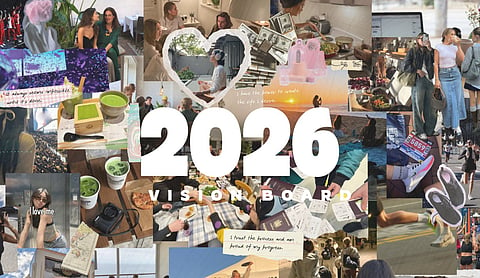

Over the past few years, the transition from one year to the next has been marked by the rise of several popular concepts. Among that, Vision boards have remained on the trending list for the past few years, with thousands of videos and posts flooding social media platforms, especially from influencers and content creators.
However, a question remains. Do vision boards really work? Do they genuinely help us move closer to our goals? And what is the science and psychology behind vision boards?
What is a vision board?
Before getting into the history of vision boards, let's understand what vision boards are. A vision board is basically a visual collection of images, words, and affirmations that represent an individual’s goals and aspirations. It can be created in physical or digital form and is often used as a motivational tool to help people clarify their intentions and maintain focus on desired outcomes. By highlighting goals related to areas such as career, relationships, or personal development, a vision board serves as a visual reference that may encourage reflection and goal-oriented action.
Historical connect
Vision boards can be connected to age-old practices of visualisation, symbolic representation, and intention setting, which are the methods humans have used for centuries to give shape to their hopes and desires. The ancient civilisations used symbols and images to express meaning and aspiration. Egyptian hieroglyphs painted on papyrus and cave paintings created by early humans were not just records of daily life; they also reflected beliefs, intentions, and wishes. In many spiritual traditions, including mindfulness practices and Ayurveda, visual focus and intention setting have long been used as tools to guide thought and behaviour.
The idea of writing intentions also has historical roots. Author Octavia E Butler filled her notebooks with written affirmations about her future success, a practice that closely resembles the purpose of modern vision boards. These personal declarations served as reminders of what a person wanted to achieve and where they hoped their life would go.
The concept became especially popular through the self-help movement. Thinkers such as Napoleon Hill promoted the idea that focused thought could influence outcomes, a belief later amplified by the “Law of Attraction” and popular culture phenomena like The Secret. Influential figures, including Oprah Winfrey, Tony Robbins, and Jack Canfield, further brought vision boards into the mainstream, presenting them as tools for motivation and clarity.
The underlying science and psychology
There is an interesting psychology behind vision boards — they work by reinforcing goals through repeated exposure. Regularly seeing images and words associated with personal ambitions can strengthen subconscious awareness, helping individuals stay motivated and more alert to opportunities aligned with their goals. Neuroscience also suggests that visualisation activates many of the same brain regions involved in real-life action, potentially preparing the mind to follow through.
Giving a mission and vision in life
Beyond the fancy trends and social media hype, vision boards can actually help people gain focus and clarity about their lives and future goals on a personal level. Personalised vision boards reinforce the idea that each individual’s goals in life are different and that everyone’s journey is unique. They encourage people to focus on creating their own visions rather than imitating or comparing themselves with others.
Modern versions of vision boards, such as those using AI-generated images that visualise a person’s future self after achieving their goals, reflect the same idea. It is about visualising our dreams and working towards them until we achieve them.
