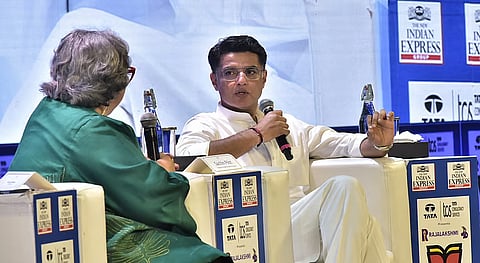

CHENNAI: Speaking at the 14th edition of the ThinkEdu Conclave on March 3, 2026, Congress leader and Rajasthan MLA Sachin Pilot said that the party will form the Government with a historic mandate in Kerala and that the general public in Tamil Nadu seemed satisfied with the governance (by the DMK).
Pilot was in a discussion on 'Beyond Degrees: Notes from the Field', with senior journalist Kaveree Bamzai.
When asked about the Congress-DMK seat-sharing talks in Tamil Nadu, he said discussions were underway, adding that the governance had been good and that the general public appeared satisfied. While opposition and dissenting voices are natural, there has largely been appreciation for the government here, he said.
"Congress has been a longstanding partner of the DMK in the state and at the Centre. Ultimately, the people will decide", Pilot added.
Pilot said that they will go on to form the government in Kerala with a historic mandate and also stand a good chance in most states that are set to go to polls soon.
"In today’s politics, ideologies change frequently. People switch from one party to another, and that is an individual’s decision. Whether that decision is right or wrong, however, will ultimately be judged by the public," he said.
Responding to a question on why young people seem comfortable with the current state of affairs in the country, Pilot said, “In the past, irrespective of the government in Delhi, there were large movements- student, labour and social movements. However, in the past decade, there has been a steady and dramatic decline in protests, demonstrations and mass movements. I think there is an ecosystem being created where there is absolutely zero tolerance for anyone trying to express views that differ ideologically and politically from those in Delhi. That’s not a good sign.”
Pilot articulated his approach to campaigning, emphasising that he avoids seeking a “negative vote.” Instead of criticising, blaming or fault-finding, he strives to be a “positive political worker.” His strategy is to present his vision, alternative plan and blueprint for the future. He believes that a clear roadmap of “here’s what I want to do” should be inherently more appealing to voters.
Addressing India’s employment situation, he said it is concerning, marked by rising rural employment, which indicates that educated and skilled workers are accepting substandard jobs, leading to widespread underemployment.
The crisis is compounded by stark economic disparity, with the top 1% holding 40% of the nation’s assets while the bottom 50% own only 3%. This widening wealth gap creates societal divisions and acutely affects globally aware young people who recognise the disparity between their potential and reality.

