

The country's Industrial Training Institute (ITI) ecosystem) is set for another round of modernisation, with the Centre approving investment plans worth Rs 735.70 crore for three ITI clusters in Rajasthan, Uttar Pradesh and Telangana.
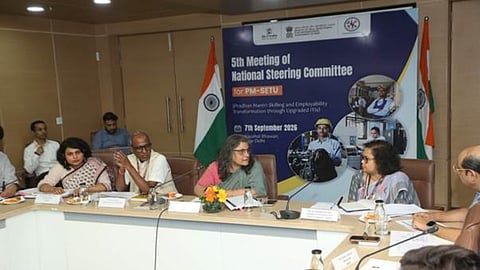
The approvals were made at the fifth meeting of the National Steering Committee (NSC) of the Pradhan Mantri Skilling and Employability Transformation through Upgraded ITIs (PM-SETU), according to a Press Information Bureau (PIB) release issued by the Ministry of Skill Development and Entrepreneurship on September 8.
The latest approvals take the total sanctioned investment under PM-SETU to Rs 2,171 crore across nine ITI clusters, marking a further push towards industry-linked vocational training.
The largest allocation among the three is for the Medchal ITI cluster in Telangana, for which a Strategic Investment Plan worth ₹254.30 crore has been approved. Government ITI Medchal will serve as the hub, with ITIs at Alwal, Shameerpet, Kukunoorpally and Siddipet functioning as spoke institutions.
In Rajasthan, Rs 241 crore has been approved for the Bhiwadi ITI cluster. Government ITI Bhiwadi will be the hub, supported by Government ITIs in Alwar, Neemrana, Tijara and Kishangarh Bas.
The Meerut ITI cluster in Uttar Pradesh has received approval for a Rs 240.40-crore investment. Government ITI, Saket, Meerut will function as the hub, with institutions in Ghaziabad, Hapur, Gautam Buddha Nagar and Baghpat included as spokes.
What will change for ITI students?
The significance of the latest approvals lies not merely in the construction or refurbishment of ITI campuses. Under PM-SETU, the cluster model is designed to connect ITIs with industry partners, allowing training programmes to respond more closely to local and emerging employment requirements.
The approved plans provide for infrastructure modernisation, upgrading existing trades, introducing new long- and short-term courses and strengthening operational capabilities, PIB said.
The broader objective is to equip ITIs to train students in skills that are relevant to emerging technologies and changing industrial requirements, potentially improving their transition from vocational training to employment.
