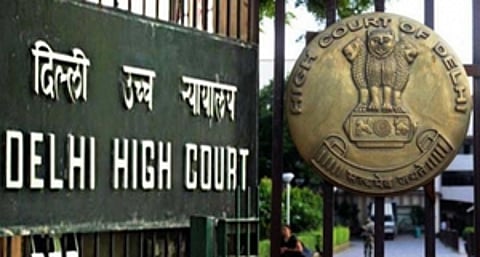

New Delhi: The right to administer educational institutions does not include the right to profiteer or charge a capitation fee, the Delhi government has told the high court while defending its new fee regulation law for private schools.
In a response filed to a batch of petitions by several schools assailing the Delhi School Education (Transparency in Fixation and Regulation of Fees) Act, 2025, the Directorate of Education (DoE) said the law was enacted to curb commercialisation and profiteering in education, in accordance with the National Education Policy, 2020.
It asserted that the Act did not violate the fundamental rights of minority institutions under Article 30 of the Constitution, as "even for minorities, the right to administer does not include the right to maladminister."
Several school associations, such as the Action Committee Unaided Recognised Private Schools and Forum of Minority Schools, have assailed the Act, calling it mala fide, biased, arbitrary and malicious in nature.
Action Committee Unaided Recognised Private Schools' petition, filed by advocate Kamal Gupta, said the law violated the fundamental rights of the managements of private schools and was enacted without any application of mind.
A bench of Chief Justice D K Upadhyaya and Justice Tejas Karia on Thursday listed the petitions for hearing in April.
The DoE responded in its counter affidavit that the Act "reasonably accommodates" the legitimate commercial interest of schools as it does not take away the power of the school management to set the fee but only creates a "reasonable mechanism" to curb profiteering.
"It was found that many students were being exploited due to commercialisation of education and therefore the 2025 Act has been enacted for a laudable objective to curb commercialisation and profiteering in education in accordance with the National Education Policy, 2020 of the Government of India," the response claimed.
The department said the Act seeks to achieve "socio-economic upliftment" through education by ensuring that quality education is afforded by all, and not only the prosperous.
"The Act is also in furtherance of the Right to Equality under Article 14 of the Constitution … Regulating exorbitant school fees and making education accessible to all are in furtherance of the goal of substantive equality enshrined in Article 14," it stated.
"The right to administer educational institutions does not include the right to profiteer or charge capitation fees, a principle consistently upheld by the Hon'ble Supreme Court," the DoE asserted.
It said the impugned Act and the 2025 rules provide a mechanism in case of non-compliance with their provisions.
The prescribed mechanism complies with the principles of natural justice since it specifically states that any order will be passed only after giving a hearing to the school management, it said.
The response said the petitioners' contention that the Act was mired in red tape and over-regulation was completely misplaced.
It asserted that the contention is founded on the "misapprehension" that a school-level fee regulation committee (SLFRC) will never be able to arrive at a consensus, when in fact it is a "small percentage of schools who are reluctant to implement" the new law.
The counter affidavit informed the court that around 1,300 schools, more than 85 per cent of the schools, have already complied with the provisions of the new law.
Under the new framework, every private school has to constitute an SLFRC, which will include representatives from the school management, the principal, three teachers, five parents and one nominee from the DoE.
Members would be selected through a lottery system in the presence of observers to maintain transparency.
The SLFRC will examine fee proposals submitted by school managements and take a decision within 30 days.
The move marks the implementation of a new law to regulate and bring transparency to the fixation of private school fees from the current academic session.
The Act will be implemented through a two-tier mechanism comprising school-level committees and district-level appellate bodies.
This report was published from a syndicated wire feed. Apart from the headline, the EdexLive Desk has not edited the copy.

