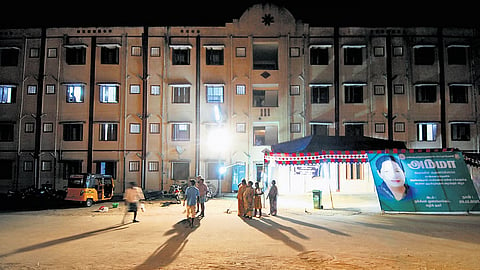

Chennai: A study of nearly 100 out-of-school children in Chennai’s Ezhil Nagar resettlement site on the city’s outskirts has shown that poverty, family distress and discriminatory school practices are among the major factors driving children out of schools.
The study, released ahead of the World Day Against Child Labour by the Information and Resource Centre for the Deprived Urban Communities (IRCDUC), stated that school dropout should be tackled through effective coordinated intervention from multiple government departments, including school education, social welfare, labour, police and health, as it is beyond the mandate of a single department.
It found that nearly 70% of the families of these out-of-school children survived on monthly incomes between Rs 5,000 and Rs 10,000, with parents engaged in informal occupations such as domestic work, street vending, conservancy work, and daily-wage labour. Adolescents aged 16-18 years formed the largest group among out-of-school children, with many dropping out to support their families or struggling to return to formal education after prolonged absences.
Of the 96 children assessed in detail, 54 were found to be living in highly vulnerable circumstances, including in single-mother households or families affected by separation, domestic violence, parental illness, disability and inadequate care giving arrangements. Eleven children were identified as using tobacco products.
The report also highlighted discrimination by schools. Based on its field interventions in Ezhil Nagar and Perumbakkam, IRCDUC said some children were discouraged from continuing their studies due to learning difficulties, behavioural issues or stigma associated with the localities they come from.
According to the study, children who are informally pushed out of schools through transfer certificates or denied opportunities to continue their education lose access not only to learning but also to one of the few protective spaces available to them.
Such exclusion can leave them vulnerable to child labour, substance abuse and other forms of exploitation. It also highlighted cases where children are returned to the same environments by child care institutions (CCIs).
The study also found significant documentation gaps, as among the 96 kids assessed, 16 lacked Aadhaar cards, 19 had no birth certificate or had unresolved birth registration issues, and 61 did not possess community certificates, creating barriers to school admission and access to welfare benefits.
The report urged the state to create a robust mechanism to follow-up children who leave school and provide bridge education programmes, apart from better coordination among departments to ensure vulnerable children remain in schools.

