
The inauguration of a new middle-school block at Government Girls Higher Secondary School, Kothibagh, Srinagar, marks the introduction of Kerala’s acclaimed Nadakkavu transformation model to Jammu & Kashmir.
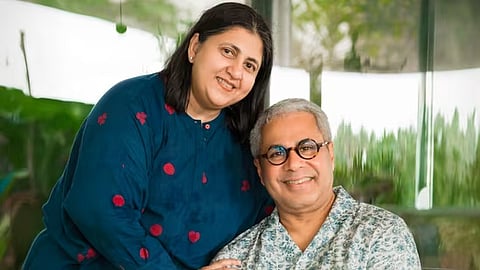
The model, pioneered in Kozhikode, is being implemented through the Faizal & Shabana Foundation (FSF), led by Founder and Chairman Faizal E. Kottikollon, the architect of the PRISM reform framework.
Kottikollon traces the inspiration for the initiative back to 2012, when he questioned why government schools could not be world-class. A visit to Kozhikode’s Nadakkavu School — then a neglected campus — became the turning point.
A detailed gap analysis carried out with IIM-Calicut laid the groundwork for a decade-long effort that transformed the school and eventually evolved into a state-wide movement in Kerala.
The Nadakkavu model, which has since impacted more than three million students, has inspired over a thousand government schools to upgrade their infrastructure, learning environments and teaching quality. Beyond Kerala, it has been replicated in one school each in Tamil Nadu, Karnataka and Jammu & Kashmir.
At the heart of the transformation is PRISM — Promoting Regional Schools to International standards through Multiple interventions.
The process begins with a needs assessment that examines gaps in infrastructure, teacher capacity, labs and learning environments. Teams spend nearly three months studying each school before beginning interventions. Educators from multiple states have also travelled to Kerala for training exchanges with Nadakkavu teachers.
A key strength of the model lies in its ability to shift student mindsets. Equal emphasis is placed on culture, sports and academics. Students from modest backgrounds at Nadakkavu have gone on to careers in medicine, engineering and biomedical fields, underscoring the impact of the transformed ecosystem.
Since 2013, Nadakkavu has consistently ranked among India’s top government schools — a track record that, Kottikollon says, encouraged widespread adoption. The foundation also shares its playbook with stakeholders willing to implement the model.
The model’s entry into Kashmir began two years ago, when Kottikollon showcased Nadakkavu’s transformation to the Lieutenant Governor of J&K, who immediately recognized its potential. The new middle-school block at Kothibagh, built in just 14 months, features modern classrooms, STEM labs, robotics facilities and a design-centric learning environment.
According to Kottikollon, the biggest challenge in public-school reform is overcoming the disbelief that government schools can match private institutions. Kerala’s media played an important role by consistently highlighting Nadakkavu’s progress. Seeing Kerala’s students interact confidently in Srinagar further strengthened support for the initiative.
Kerala and J&K have both issued government orders enabling FSF’s partnerships, but Kottikollon believes India needs a uniform national policy to scale such reforms.
With J&K adopting the model, he views the transformation as a pan-India movement. Looking ahead, he hopes to bring philanthropists, business leaders and policymakers together to expand the impact.
The Kothibagh project, he says, is “a spark that can ignite a national movement,” with the goal of transforming the lives of millions of students.

