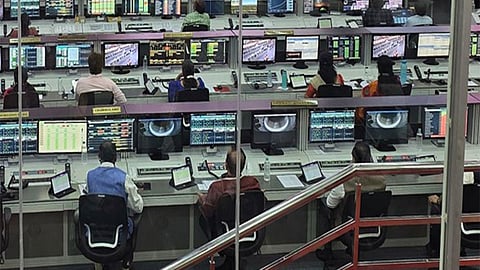

New Delhi, India (PTI): Installed capacity of data centres in India is expected to grow by about 3-fold to 5 to 6 gigawatts by 2030 from around 1.65 gigawatts at present, market research firm Redseer Strategy Consultants said on Thursday.
The demand for data centres is being driven by the requirement to store data locally under laws such as the Digital Personal Data Protection Act and sectoral mandates from RBI and IRDAI, increasing data consumption and AI workloads, besides the low cost of setting up the facilities in India at around USD 8 million per megawatt, Redseer report said.
"Installed capacity stood at around 1.65 GW in calendar year 2025 and is expected to reach 5-6 GW by CY2030, a CAGR of 27-32 per cent across the decade from CY'20. Delivery of that trajectory requires the commissioning, within 5 years, of several times the capacity presently installed in India," Redseer's India Data Centres report said.
The report said that the projected 5-6 GW of installed IT load by 2030 implies approximately 7-9 GW of grid draw. Redseer estimates around 5 GW of incremental grid capacity still needs to be secured, contracted and energised, against around 2.7 GW at present.
Mumbai accounts for around 50 per cent of installed capacity, while Mumbai and Chennai together account for around 66 per cent. Redseer said that the geography of the sector could begin to change as AI demand grows.
Redseer expects latency-sensitive inference and regulated workloads to remain around established hubs, while training and batch workloads can move towards locations with stronger power and land availability.
The report identifies Hyderabad and the Andhra coast as locations expected to see significant relative gains, with Gujarat and Rajasthan also emerging as potential markets for training and batch workloads.
This report was published from a syndicated wire feed. Apart from the headline, the EdexLive Desk has not edited the copy.

