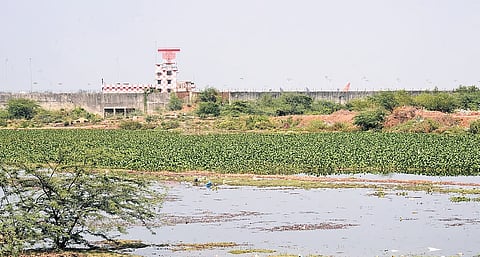

CHENNAI: The city’s international airport is pressing ahead with a long-delayed satellite terminal project, repackaged as a riverfront regeneration scheme after a technical study by the Indian Institute of Technology Madras (IIT-M) concluded it could address the city’s chronic flooding vulnerabilities while adding passenger capacity.
The proposal, planned along the banks of the Adyar river, had languished for years over the cost and scale of land acquisition required. IIT Madras, however, found the project could reinforce flood-prone riverbank stretches, check encroachments on the waterway and unlock tourism infrastructure, according to M Raja Kishore, the airport’s director.
The institute also concluded construction could be integrated with existing flood-mitigation frameworks in the Adyar basin, defusing what had been one of the more sensitive objections to the scheme.
“We initially proposed the project in a different form, but it involved substantial land acquisition and was very expensive,” Raja Kishore said. “IIT Madras conducted a technical study on the riverfront option and identified several benefits.”
The airport has submitted the study findings to the relevant authorities and is awaiting approvals before the project can advance.
The terminal push comes as Chennai airport faces mounting pressure on passenger-handling capacity. The facility ranks among the country’s most congested, and planners have long sought ways to expand. This also comes after Chennai airport’s plan to cater to 55 million passengers per annum was put to rest after the Tamil Nadu government dropped the plan to acquire 193 acres of land for expansion of the airport in 2024.
The airport director has suggested 50:50 funding between the state and the airport authority. It is learnt the state is examining such a proposal but there has been officially no letter from the airport authority to Chennai Unified Metropolitan Transport authority as of now.
Separately, airport officials are examining whether cargo infrastructure can be meaningfully expanded, though Raja Kishore struck a cautious note. Chennai’s freight operations are heavily dependent on belly cargo carried aboard passenger aircraft, making a standalone cargo facility a difficult commercial proposition.
“Exclusive cargo operations alone cannot drive growth,” he said. “Belly cargo accounts for a substantial share of traffic and remains critical to future cargo potential.” Any expansion, he suggested, would need to be structured to serve both passengers and freight rather than treating the two as separate growth levers.
Chennai airport, one of the largest airports in India, is functioning in only 1,317 acres of land, the smallest when compared to other major airports in India.
This story has been written by C Shivakumar of The New Indian Express.

