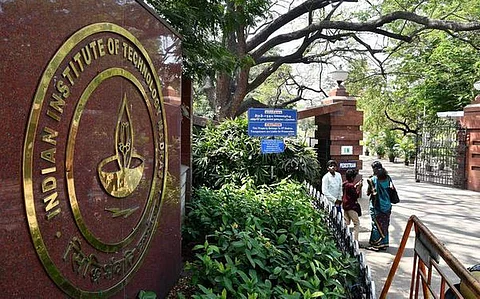

A multinational team of researchers from eight countries, led by the Indian Institute of Technology (IIT), Madras, conducted a study on how gaseous emissions from power plants lead to changes in cloud formation to ascertain the impact of coal-fired power plants on the climate, states PTI.
The research, conducted amidst the COVID-19 lockdown in India, offers valuable insights into the effects of reduced human-related emissions on aerosol traits and cloud formation. Thus, it advances the comprehension of the implications of coal-fired power plant emissions in the context of climate change, officials told PTI.
By focusing on the Neyveli coal-fired power plant, situated about 200 km south of Chennai, the scientists explored how the atmospheric conversion of gaseous emissions from power plants into particulate matter results in particles that are rich in sulphate and consequently have high cloud-forming potential compared to natural counterparts.
"Our study provides a rare opportunity to examine the sensitivity of cloud-forming aerosol particles to new particle formation and growth due to SO2 emissions from a coal-fired power plant under relatively cleaner conditions. These findings have important implications for assessing the climate impacts of anthropogenic aerosols and highlight the need for comprehensive emission control measures," said Sachin S Gunthe, the Coordinator of the Centre for Atmospheric Sciences at IIT Madras.
"This occurs under relatively cleaner conditions in tropical India. These findings are of immense importance to climate modellers as they establish a baseline for comparison against the typically prevalent conditions in heavily polluted coastal Indian cities," he said.
A doctoral student, Aishwarya Singh, from the Centre for Atmospheric and Climate Sciences at IIT Madras, played a vital role in maintaining and operating advanced measurement instruments even amidst the challenging conditions of the lockdown. Singh's dedication led to the continuation of critical observations, resulting in valuable scientific discoveries.
"We had started running our aerosol characterisation equipment for routine measurements just a few days before the lockdown was announced and I was presented with an option of shutting down all the instruments and going home by my doctoral advisor. Upon discussing the possibility of continuing the measurements during the lockdown with him, I decided to stay back to carry out the observations, anticipating some interesting scientific findings," Singh said.
The study highlights the complexity of addressing air pollution in coastal regions like Chennai. Aggressive measures to curb pollution from sources such as traffic and industries might have unintended consequences. Therefore, the researchers emphasise the need for a comprehensive reevaluation of strategies to effectively combat air pollution at the regional level.
