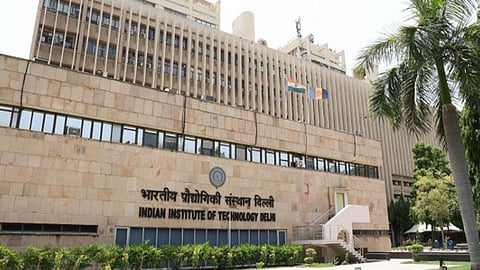

New Delhi, Nov 18 (PTI): Researchers from the Indian Institute of Technology Delhi (IIT Delhi) have created a high-resolution dataset of bioclimatic variables, widely used by ecologists to study the environment.
Based on rainfall and temperature datasets, bioclimatic variables turn temperature and rainfall records into measures relevant to living systems, such as annual mean temperature and rainfall during the wettest and driest seasons, the team explained.
So far, scientists studying Indian regions have relied on global products such as NASA's 'MERRAclim' and the University of California 'WorldClim', which lack the fine- scale to capture India's sharp climatic and terrain contrasts, they said.
Titled 'IPEDClim', the bioclimatic atlas of India, published in the journal 'Environmental Research: Climate', covers the whole country at a resolution of about 10 kilometres, providing a detailed representation of India's diverse climatic conditions.
"This is the highest resolution data set in India in this sector. I'm expecting that there will be (a) wide usage for it," lead researcher Manabendra Saharia of the department of civil and environmental engineering, IIT Delhi, told PTI.
"The temperature data set (used in the study) is India Meteorological Department's official data set that they have been releasing for many, many years. It is just that it was not tailor-made for ecological studies, and precipitation (dataset) is something that we have developed on our own last year," he said.
The precipitation dataset was released by the Ministry of Earth Sciences in July 2025, to which the recent study is a follow-up to essentially develop bioclimatic variables for ecohydrological applications, Saharia said.
The work, funded by the National Mission for Clean Ganga (NMCG) under the Ministry of Jal Shakti, will support ecological, agricultural, and environmental studies across the country, the researchers said.
Ecologist Raman Sukumar of the centre for ecological sciences, Indian Institute of Science in Bengaluru, explained, "Bioclimatic data are extremely useful to ecologists in understanding the environmental drivers of a variety of large-scale ecological processes they observe in the field."
"The processes can include primary productivity of ecosystems, carbon stock changes in forests and grasslands, occurrence of wildfires, changes in plant phenological events (leaf flush, flowering and fruiting) and so on, he told PTI.
"Ideally, robust bioclimatic data for multiple decades at the c.10km (10 kilometre) scale as provided in this study can be used to understand ecological changes happening at the scale of biogeographic zones, biomes, and regions of a country such as India. How do ecosystems respond, for instance, during a strong El Nino year as opposed to a normal or a La Nina year," Sukumar said.
He added that the database would first need to be corroborated with field measurements of temperature, rainfall and other climate variables for application of bioclimatic variables at finer scales, such as c.1km (one kilometre) resolution, for ground-based forest ecological monitoring -- as Sukumar's team has done at Mudumalai National Park in Tamil Nadu, where permanent forest plots spanning one to several hectares have been monitored for over three decades.
"In the coming months, we hope to test the IPEDClim data at our study area and see how best we can use this to derive multi-decadal changes in the Mudumalai forests combining it with satellite data as well as our ground-based inventories," Sukumar said.
(PTI)
This report was published from a syndicated wire feed. Apart from the headline, the EdexLive Desk has not edited the copy.
