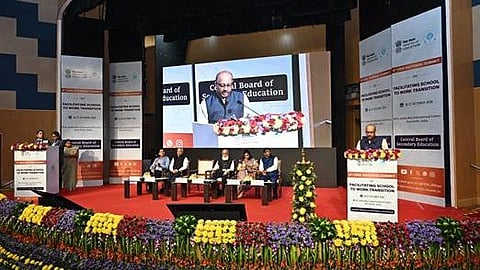


New Delhi: The two-day summit, organised in collaboration with Sahodaya School Complexes of Delhi-NCR, seeks to bring skill education closer to mainstream schooling and help students prepare for the transition from classrooms to the workplace.
Addressing the inaugural session, School Education Secretary TK Anil Kumar highlighted four key areas of focus: technology, digital safety and skills; design, creativity and innovation; recognition of skills across education systems through the National Credit Framework; and career guidance with equitable opportunities.
Kumar emphasised the need for a smooth transition from school to higher education, skill development and employment. He said students should be equipped to make informed choices, pursue lifelong learning, contribute to society and lead lives with dignity.
"The summit is bringing together school leaders, educators, industry experts and policymakers to deliberate on emerging workforce requirements and innovative approaches to prepare students for future careers. The summit is also providing networking opportunities for the participants to connect and build partnerships for guidance and support from each other," the ministry said in a statement.
"The summit underscores the importance of breaking down barriers among different streams of education and equipping students with the competencies required to navigate an evolving employment landscape, as envisioned in the National Education Policy (NEP) 2020," it added.
Through interactive sessions and expert discussions, the summit is enabling participants to explore innovative pedagogical practices, emerging assessment approaches, digital integration in education, and effective models for strengthening skill education.
As part of the summit, educators from CBSE-affiliated schools are presenting case-based papers and posters highlighting success stories and best practices in skill education.
The summit will also impart to participants insights on emerging trends and transformative practices in school education, along with innovative and practical strategies to enhance teaching-learning processes.
With inputs of PTI
