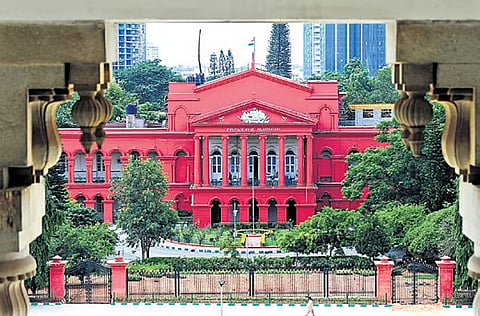

BENGALURU: The Karnataka High Court on Monday restrained the state government from implementing the increase in reservation under the Karnataka Scheduled Castes and Scheduled Tribes (Reservation of seats in Educational Institutions and of Appointments or posts in the services under the State) Act, 2022.
A division bench of Chief Justice Vibhu Bakhru and Justice CM Poonacha passed the interim order after hearing a batch of petitions, including a public interest litigation filed by Mahendra Kumar Mitra, challenging the provisions of the Act.
The court said that no further notifications for recruitment or appointments on the basis of increased reservation should be issued till the petitions are disposed of. Recruitments that have already begun may be continued, but appointments should be subject to the final outcome of the present petitions, the court said.
“All appointment or promotion letters would expressly indicate that the appointment and the promotion is subject to the outcome of the present petitions and the candidates would not claim any equities in the event the increased reservation is struck down,” the court said. It also clarified that Monday’s order is confined only to modifying the earlier order dated November 19 passed by this court and would not affect the operation of any other specific interim order or final order granted by the court or the tribunal.
The petitioners contended that as per Section 4 of the Act, the reservation for SCs has been increased from 15% to 17% and for STs from 3% to 7%. The reservation for backward classes continues to remain at 32%. With the implementation of the Act, the reservation for reserved categories exceeds 50%. This is contrary to the law laid down by the Supreme Court in the case, Indra Sawhney and others versus Union of India. The petitioners also submitted that the National Commission for Scheduled Castes and the National Commission for Scheduled Tribes have not been consulted on the reservation as required under Article 338 (9) and 338-A (9) of the Constitution.
The court permitted appointments that have already begun by modifying an interim order of November 19 after Advocate-General Shashikiran Shetty submitted that prior to the stay order on November 19, notifications had been issued for recruitment, and the process had already begun. If it is interdicted, the state would suffer a shortage of manpower, he said.
He also referred to the interim order of May 1, 2023, passed in a Petition for Special Leave to Appeal by the Supreme Court in Yogesh Kumar Thakur versus Guru Ghasidas Sahitya Avam Sanskriti Academy & Others. The Supreme Court had permitted the state to go ahead with the selection and make appointments and promotions. The apex court too had clarified that it would be subject to the result of the petitions. It had also directed that all appointment and promotion orders would specifically mention that they are subject to the final outcome of the proceedings, he told the court.

