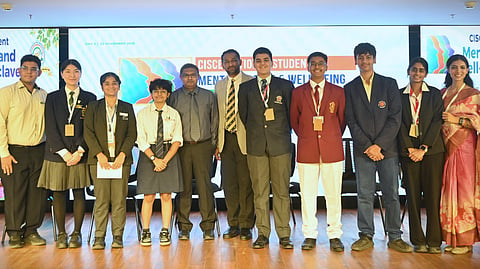

The Council for the Indian School Certificate Examinations (CISCE) organised its first National Student Mental Health and Well-Being Conclave 2026 at its Centre of Excellence in Hyderabad from November 20 to 22.
The three-day event brought together 72 student delegates and 18 teacher delegates representing 18 regions across the country. It aimed to place students at the centre of discussions on adolescent mental health by giving them an opportunity to share their experiences, identify concerns and contribute recommendations for emotionally safe and supportive schools.
According to a press release from CISCE, the national conclave was the culmination of a three-tier initiative involving school-level dialogues, virtual regional conclaves across 18 regions and national-level deliberations. The wider initiative was designed to engage nearly 16 lakh students from Classes VI to XII, more than 32,000 teachers and over 3,300 affiliated schools.
Discussions covered four themes: student stress and academic pressures; emotional well-being, digital life and positive relationships; drugs, substance abuse and healthy choices; and building resilience and help-seeking behaviour.
The programme featured thematic discussions, expert-led sessions, collaborative workshops and a panel discussion, facilitated by experts from academia, industry and professional practice.
The deliberations are expected to contribute to four national outcomes: the CISCE Student Mental Health Charter, Student Well-being Index, Repository of Best Practices and a White Paper on Emerging Mental Health Concerns among Adolescents.
“A truly student-centred education system begins by listening to its learners. Our responsibility is to transform their voices into institutional commitments, responsive school practices and lasting change,” said Dr Joseph Emmanuel, Chief Executive and Secretary, CISCE.
Highlighting the importance of supportive relationships, Aradhna Chand, school counsellor and psychology educator at St Thomas School, Jagadhri, Haryana, said, “Connection comes before correction; a child’s sense of safety and belonging shapes emotional, academic and digital well-being.”
Student delegates also spoke about their experiences at the conclave. Yashraaj Saha of Holy Cross School, Agartala, said, “For the first time, I felt my voice mattered; I belonged, and every interaction made the experience feel like home.”
Aradhya Singh of Lucknow Public College, Lucknow, said that she was returning with greater self-awareness, meaningful friendships and new perspectives on emotional well-being.
Dr Emmanuel said that the student delegates would return to their schools and regions as ambassadors of mental health and well-being, carrying forward the insights and commitments from the conclave.
