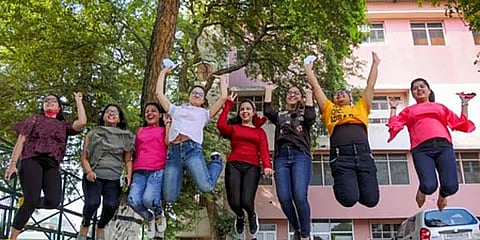

In 2023, Sania Ghosh of Shri Shikshayatan School, Kolkata, scored 96.8% in Humanities in the CBSE Class 12 examinations. Now a third-year Economics student at Jadavpur University, she recalls how many people assumed she would choose the conventional science stream because of her academic record.
Every year, board exam toppers dominate headlines, becoming symbols of hard work and academic excellence. Yet beyond the celebrations and social media praise remains a more layered reality, one where ranks give way to questions of identity, resilience and personal growth. For many toppers, the biggest ride begins after the results are declared.
“The most prevalent misconception was that I would pursue science,” says Ghosh. “But my focus was an understanding of economic theory and socio-economic challenges.” She chose Economics with Mathematics instead and continues to pursue the subject at the undergraduate level.
Her experience reflects a wider pressure faced by toppers: the expectation to follow “safe” or prestigious career paths irrespective of personal interest. “Critical inquiry, empathy, adaptability and communication skills far outweigh the value of exam scores,” Ghosh says, adding that college life taught her the importance of engaging with real-world issues beyond academics.
For Krishty Chakraborty, topper of Bholabhavan Rabitirtha Vidyalaya with 94.9% in West Bengal’s CBSE Class 12 examinations this year, living up to the “topper image” proves more difficult than securing the rank itself.
“Achieving the first rank is difficult, but managing the expectations that follow is often a much greater challenge,” she says.
Krishty recalls a turning point during her Madhyamik examinations when health complications after the pandemic affected her scores. Although she secured 97 out of 100, she felt devastated because her long-held image as a consistent topper had been shaken.
“That setback became my greatest teacher,” she says. “It replaced the fragility of needing to be perfect with genuine resilience. A single exam measures how you performed on one particular day. It does not script your destiny.”
Now pursuing English Honours at Kalyani Mahavidyalaya, Krishty says she initially struggled with the transition from Science and Bengali during pre-test experiments that taught her how to plan better and manage panic. Her advice to younger students is simple: avoid sacrificing sleep and health for marks. “If our brain stops working because of lack of rest, we can’t top anything,” she notes.
Despite their achievements, all three students emphasise the significance of building identities beyond academics. Sania became actively involved in student leadership and campus initiatives, while Krishty continued nurturing her interests in singing, drawing and writing.
“I firmly believe holistic education is necessary,” Krishty says. “Co-curricular activities build resilience and perspective.”
Their journeys challenge the stereotype that toppers are naturally immune to failure or uncertainty. Instead, they reveal that setbacks, self-doubt and reinvention remain central to personal growth. Perhaps the strongest common thread running through their experiences is the belief that academic scores are temporary, while qualities like curiosity, consistency and courage endure far longer.
“People will forget these marks after months,” Ayanna reflects. “But if we keep learning and don’t quit when things get hard, we will go further.”

