
THIRUVANANTHAPURAM: Poetry is experienced before it is understood. The rhythm and cadence of a well-crafted recitation can create a magic world in which words jump out of the page and reel in listeners.
Few moments rival the attention of a classroom when a teacher brings a poem to life.
As students trace each line in their textbooks, the verses slip easily into memory.
Now, an initiative is attempting to recreate that feeling with the help of technology.
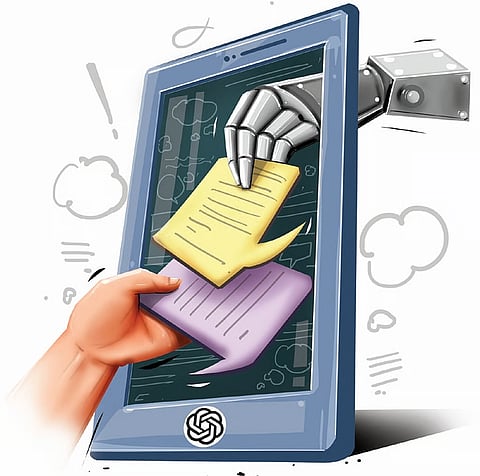
Poems in school textbooks published from 1957 and 2025 are being presented with the help of artificial intelligence and posted on the Facebook page ‘Thettadi Mag’.
The project employs Suno AI to identify the metre and rhythm of each poem and compose matching tunes and recite them.
Around 25 poems have been uploaded so far, with plans to expand the collection to 50 in the initial phase.
Udayan, a teacher at Govt VHSS Mancha, Nedumangad, and the person behind the initiative, said the effort is meant to help readers reconnect with poems they may have forgotten. “This is an attempt to help them recollect and reconnect,” said Udayan.
The collection features well-known works, including Kalankamatta Kai by Balamani Amma, Yathra Vachanam and Lokame Yathra by Sr Mary Banenja, Nammude Rajyam by Thirunainar Kurichi Madhavan Nair, Aaru Nee? by Kadathanattu Madhavi Amma, Poombatta by G Sankarakurup, Alappuzha Vellam by Anitha Thampi, Cycle Chavittan by PP Ramachandran, Njanalla by Lalitha Lenin, Pookkalam by Changampuzha, Ambili by Kumaranasan, Swathanthryam Thanne Jeevitham by Vallathol, and Gandhithodalmala by Anwar Ali.
The response has been mixed, Udayan pointed out, as some listeners remain cautious about creatively collaborating with AI. Minor pronunciation errors have appeared in a few tracks, but prompts are refined to correct them.
V Vinaya Kumar, who helped oversee the project, said the technology has been surprisingly perceptive at times.
“Certain poems follow specific metres and rhythms. I was surprised to see AI recognise them and tune the poems accordingly. Sr Banenja’s poem in pancha chamaram vritham was rendered exactly in that pattern. Poems like Cycle Chavittan and Alappuzha Vellam also retained their rhythmic structure,” Vinaya Kumar said.
At the same time, he said AI still needs to grow in understanding regional languages. “Pronunciations and line breaks can occasionally go wrong. But the format helps people bond with poems. It could change how future generations experience textbook literature,” he added.
Vinaya Kumar said the audio format can take poetry beyond classrooms. Sharing images of old textbooks alongside the recordings also adds to the curiosity of younger readers.
The initiative suggests that technology may soon reinvent the way literature is heard, remembered, and revisited.
The story is reported by Varsha Somaraj of The New Indian Express

