
KOCHI: In November, the parents of a Class VIII student in Ernakulam found that their 12-year-old son had transferred nearly Rs 1 lakh from his mother’s bank account to a classmate to buy a newly launched mobile phone.
Though the money was recovered through the intervention of parents and teachers, the boy became socially withdrawn and began displaying anti-social behaviour, prompting the family to seek help from a clinical psychologist.
In another incident last month, a 16-year-old girl from Chottanikkara was found dead in a quarry, leaving behind a note suggesting distress over the alleged suicide of a Korean friend she had met on Instagram.
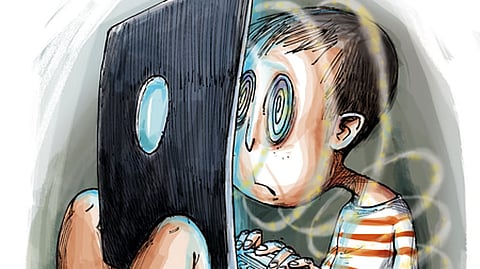
These cases reflect a growing and troubling trend of digital addiction among children and adolescents, according to officials at the Neurobehavioral and Child Guidance Centre in Kakkanad.
As of January 19, 2026, a total of 2,309 children had undergone counselling for online or gadget addiction at the Digital De-Addiction (D-DAD) Centres, an initiative launched by the Kerala Police in January 2023 to address digital dependency among minors.
Officials said the figure represents only a fraction of the actual cases. “It represents only the cases that reached D-DAD centres and is merely the tip of the iceberg. Many more cases are reported in schools, directly referred to professional psychologists, or remain unaddressed,” said an official with the Social Policing Directorate.
District-wise, Kollam reported the highest number of cases (591), followed by Kozhikode (411), Thrissur (381), and Kochi (300).

1,306 cases successfully resolved
Of the total cases handled, 1,306 were successfully resolved, the officer said. Among those affected, boys are more commonly drawn to video and online gaming, while girls tend to be more engaged in chats and social media platforms, an official said.
Sooraj Kumar, who oversees social policing programmes including the Student-Police Cadet initiative, said many children who approach D-DAD centres are in severe emotional distress. “With proper counselling, we have been able to resolve many cases and help children combat digital addiction while promoting safe internet practices,” he said.
He cited the case of a Plus-I student brought to the Kochi centre following behavioural changes. Counselling revealed emotional distress stemming from a brief 21-day online relationship. Though she initially improved, counsellors later found she was operating multiple fake Instagram accounts. Her parents dismissed the warning, but within a week, the girl eloped with one of the boys. Sooraj added that “while there was little acceptance of D-DAD centres initially, parents and the public are now increasingly recognising their importance.”
Pranav M S, a Kochi-based senior consultant psychologist, said digital addiction must be addressed through clinical counselling along with sustained parental support. “In our curriculum, we study various subjects, but mental health issues and ways to handle such problems are rarely addressed.
Children today often struggle to tolerate even minor criticism and tend to feel blamed or judged easily. Strong parental and teacher support, meaningful communication, encouragement in analytical thinking, skill development, and problem-solving abilities can help them overcome digital addiction,” he said.
Pranav said while police-led counselling initiatives are commendable, cases should ideally be referred to qualified clinical psychologists for more effective intervention.
The story is reported by Abdul Nazer M A of The New Indian Express
